Lesson Plans: Science > Chemistry > Fire > One-Match Fire
One-Match Fire
Lesson Plan by Thomas J. Elpel
Grade Levels: This lesson was designed for use with students in grades 5 - 8, but it can also be used with high school students.
Objectives:
1) Enable students to conceptually and experientially understand the fire pyramid (oxygen, heat, fuel) and the pyrolysis of the fuel.
2) Enable students to competently gather tinder, kindling, and wood, and start a fire with a single match.
Background Information: The use of fire is one of the key skills that enabled our species to spread across the globe. Fire kept our ancestors warm in cold climates, enabled the manufacture of tools and pottery, and cooked their food to make it more digestible. Unfortunately, many adults today do not understand fire well enough to start one competently, and some people do not understand why a match won't light a six-inch diameter log.
It is possible to develop an intimate understanding of fire without conceptually knowing anything about it, as our ancestors did through most of human history, simply by spending a lot of time around campfires. This lesson plan, however, is intended to combine the benefits of experientially understanding fire with the benefits of conceptually understanding the science behind it.
 Materials Needed:
- Box of wooden matches, plus additional striker
- Suitable source for tinder, kindling, and firewood, preferably where the students can collect their own from nature. A pile of mixed branches and dry grasses will do.
- Safe place for starting fires, such as a park with barbecue grills.
- Buckets of water, or a hose, or other fire suppression equipment.
Also recommended:
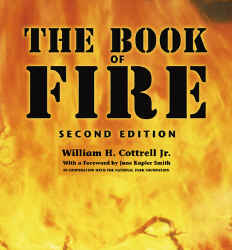
- The Book of Fire by William H. Cottrell, Jr
- Marshmallows and sticks for roasting them
Presentation: Practice starting the one-match fire until you are proficient at it yourself. When confident with your skills, bring the class out for an experiential lesson. Ideally, the weather should be dry enough to facilitate fire starting, but not too dry. Students should be mildly challenged to start a fire with only one match, without the aid of paper or cardboard. Do not do this activity in dry conditions when there is a risk of starting a wildfire.
Step One: Trial and Error: Direct students to gather wood and tinder and prepare it to start a fire. Then give each student one match and a strike pad to light it. See how well the students can effectively light a fire (and keep it going) starting with only one match.
Next, conduct a group discussion to explore why some students were more successful at fire-starting than others. What types of fuel worked or didn't work for starting a fire? How did the amount of fuel or the arrangement of the fuel affect the success of fire-starting?
Step Two: Pyrolysis and The Fire Triangle: Photocopy the Fire Triangle handout and pass it out to the class for discussion. To sustain combustion, a fire must have appropriate fuel and adequate amounts of heat and oxygen. Discuss the fire triangle in relation to tinder such as dry grass and twigs as well as to a larger piece of firewood. What is the appropriate fuel? Where does the oxygen come from, and how might a person increase it? Why is heat required to sustain a fire? Discuss pyrolysis-the use of heat to convert organic compounds into fuel vapor (long carbon chains into short ones). Why won't a large piece of wood light with a match? (Not enough heat to initiate pyrolysis.) Why does a stick burn better when the flaming end is held downward instead of up? Use The Book of Fire as an illustrated aid for discussing fire chemistry.
.
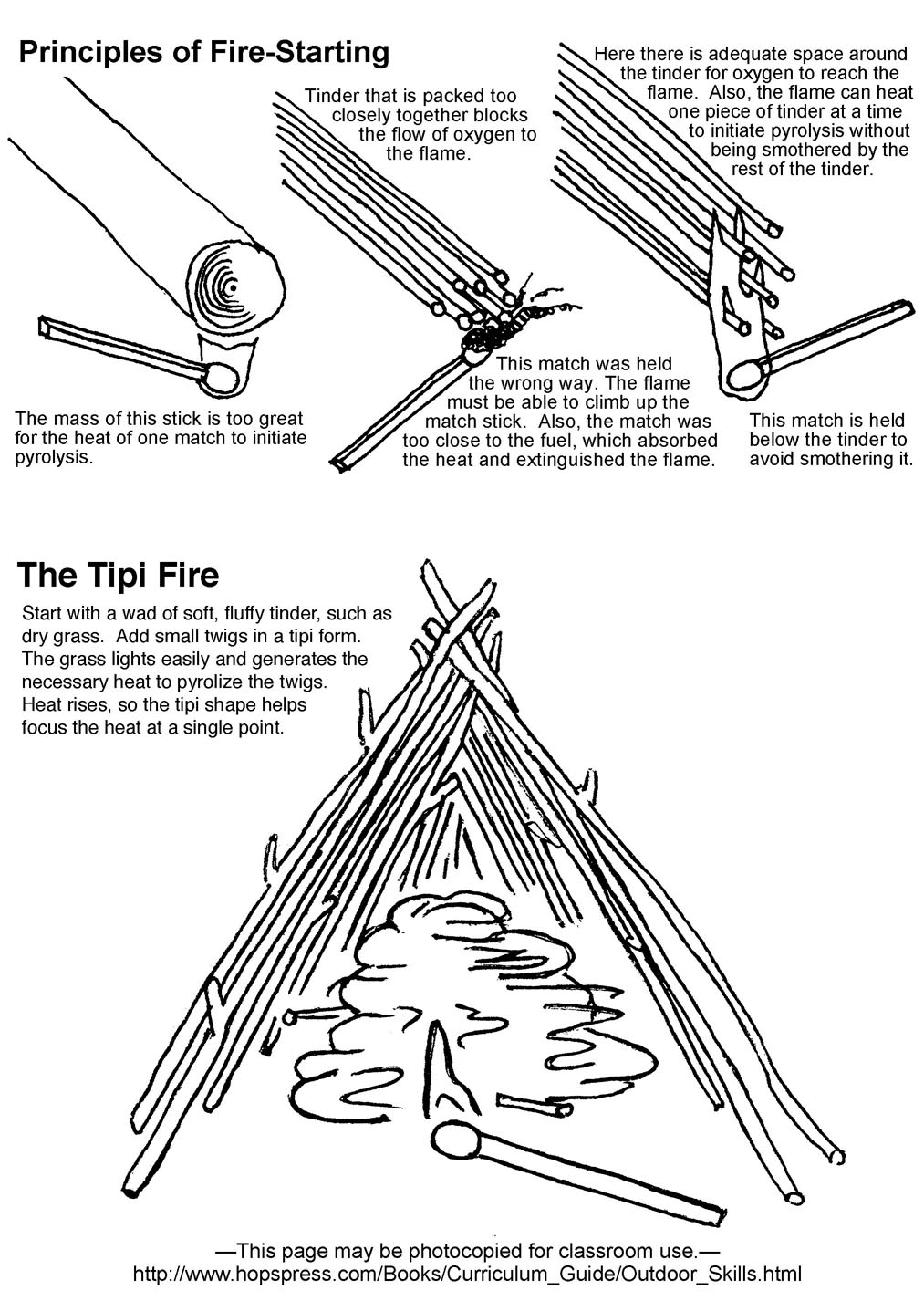
Step Three: The Tipi Fire: Photocopy the Principles of Fire-Starting handout and pass it out to the class. Use real sticks and grass or other dry fluffy tinder as physical models for discussion. Next, provide students with another match and another chance to start a one-match fire. How many students are able to start a fire now? Some students may need to refine their techniques and use additional matches to get their fires going. Every student should have the opportunity to successfully start a fire.
Extinguish and clean up extra fires and bring the group together to roast marshmallows. Roasting marshmallows can be a subject for additional discussion. See The Book of Fire for additional information.
Step Four: Fire Clean-up and Safety: Do not allow students to throw any trash in the fire other than paper. Bring a trash bag to pick up litter from fire pits and the surrounding area. At the end of the activity be sure to completely soak the fire with water. Stir the water into the ashes and coals until it is safe to feel by hand.
Assessment: Some students will attain an aptitude for understanding fire both experientially and conceptually. They will be able to start a fire easily and describe what is happening and why they need to start with small fuel and add to it with progressively larger fuels. Other students may have an aptitude for the physical skill, but lack a conceptual understanding, or vice-versa. That's okay. There is more than one way to understand the material. If a test is needed, then provide matches and give an "A" for any student that can start a one-match fire, a "B" for students that require two matches, and so forth. Keep in mind that the most important goal is to spark the students' interest in the subject matter and ignite their passion to learn and experience more.
Go to Books & Videos by Thomas J. Elpel.
Return to Outdoor Skills On-line Curriculum Guide.
Return to HOPS Press, LLC.


 HOPS Press LLC